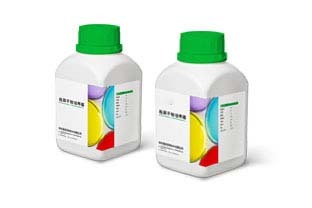
Acetamide Agar for Selective Isolation and Cultivation of Pseudomonas aeruginosa
Acetamide Agar is a selective differential culture medium designed for the isolation and cultivation of Pseudomonas aeruginosa. It relies on acetamidase production to screen target strains.
Formula Composition (per Liter)
| Ingredient |
Content |
| Acetamide |
10.0 g |
| Sodium chloride |
5.0 g |
| Dipotassium hydrogen phosphate |
1.39 g |
| Potassium dihydrogen phosphate |
0.73 g |
| Magnesium sulfate |
0.5 g |
| Phenol red |
0.012 g |
| Agar |
20.0 g |
| Final pH |
7.2 ± 0.1 at 25 ℃ |
Verification Principle
Bacteria that produce acetamidase can take acetamide as carbon source and decompose it to form alkaline substances. Sodium chloride maintains osmotic balance. Dipotassium hydrogen phosphate and potassium dihydrogen phosphate serve as buffering agents. Magnesium sulfate supplies essential ions for bacterial growth. Agar acts as the gelling agent. Phenol red functions as the pH indicator.
Directions for Use
Weigh 37.6 g of the medium powder, heat and dissolve in 1000 mL distilled water, dispense into containers, autoclave at 121 ℃ for 15 minutes, and store for later use.
Note: This medium contains magnesium sulfate and acetamide. A small amount of precipitation after sterilization is acceptable.
Microbial Performance Test for Acetamide Agar
Prepare the medium following the instructions. Inoculate the quality control strain and incubate aerobically at 36 ± 1 ℃ for 24 ± 2 hours.