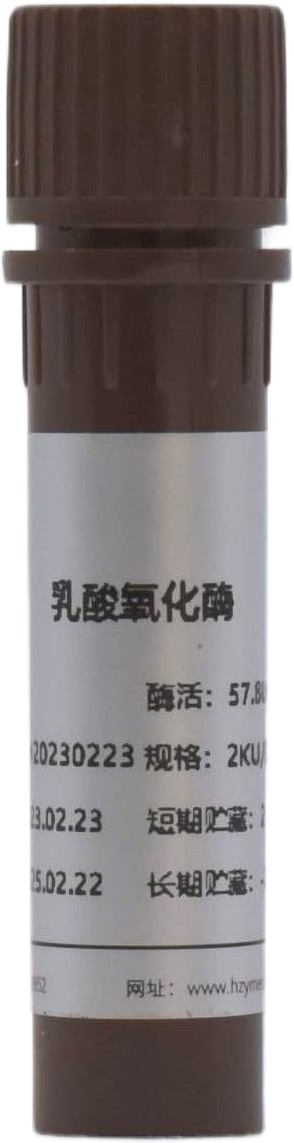
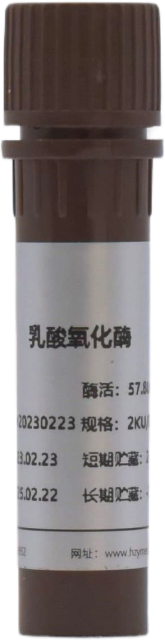
Lactate Oxidase for Lactate Content Detection
Lactate Oxidase (EC 1.1.3.2) is a microbial oxidase supplied as yellow amorphous lyophilized powder. It is widely applied in biochemical diagnostic kits for the quantitative detection of lactate.
Technical Indicators
| Item |
Specification |
| Appearance |
Yellow amorphous freeze-dried powder |
| Protein Purity |
≥ 90% |
| Specific Activity |
≥ 20 U/mg enzyme powder |
| Pyruvate Oxidase |
≤ 0.001% |
| Choline Oxidase |
≤ 0.001% |
| Uricase |
≤ 0.001% |
| Glucose Oxidase |
≤ 0.001% |
Enzymatic Properties
- Source: Microorganisms
- EC No.: EC 1.1.3.2
- Molecular Weight: 42 kDa (SDS‑PAGE)
- Isoelectric Point: pH 4.6
- Km value: 7.5 × 10⁻⁴ M (for L‑Lactate)
- Optimal pH: 6.0–7.0
- Optimal Temperature: 50 ℃
- pH Stability: pH 6.0–8.5 (25 ℃, 16 h)
- Thermal Stability: Stable below 50 ℃ (pH 7.0, 30 min)
- Storage Stability: ≥90% activity retained after 12 months stored at -25 ~ -15 ℃
Enzyme Activity Definition
One unit of enzyme activity is defined as the amount of enzyme that catalyzes the production of 1 μmol H₂O₂ per minute under specified assay conditions.
Reagent Preparation
- Reagent I: 0.2 M potassium phosphate buffer, pH 6.5
- Reagent II: 1 kU/mL Peroxidase (POD) solution
- Reagent III: 50 mM 4‑AA solution
- Reagent IV: 0.5 M DL‑lactic acid solution, pH 6.5
- Reagent V: 50 mM TOOS solution
- Enzyme Diluent: 10 mM potassium phosphate buffer (pH 7.0) containing 10 μM FAD
- Sample: Dilute enzyme stock with enzyme diluent to 0.05–0.2 U/mL
Reaction Mixture Formula (Total 50 mL):
Reagent I: 10 mL; Reagent II: 0.25 mL; Reagent III: 1.5 mL; Reagent IV: 5 mL; Reagent V: 1.5 mL; add double distilled water to make up to 50 mL.
Operating Steps
- Pipette 1 mL reaction mixture into a 1 mL cuvette.
- Preheat the mixture at 37 ℃ for 5 min.
- Add 20 μL test enzyme solution and mix thoroughly.
- Monitor absorbance change at 555 nm, 37 ℃, record ΔAs within 1 min.*Blank control: Replace enzyme solution with enzyme diluent, keep other steps identical, record ΔAb.ΔA = ΔAs − ΔAb