Pfu DNA Polymerase
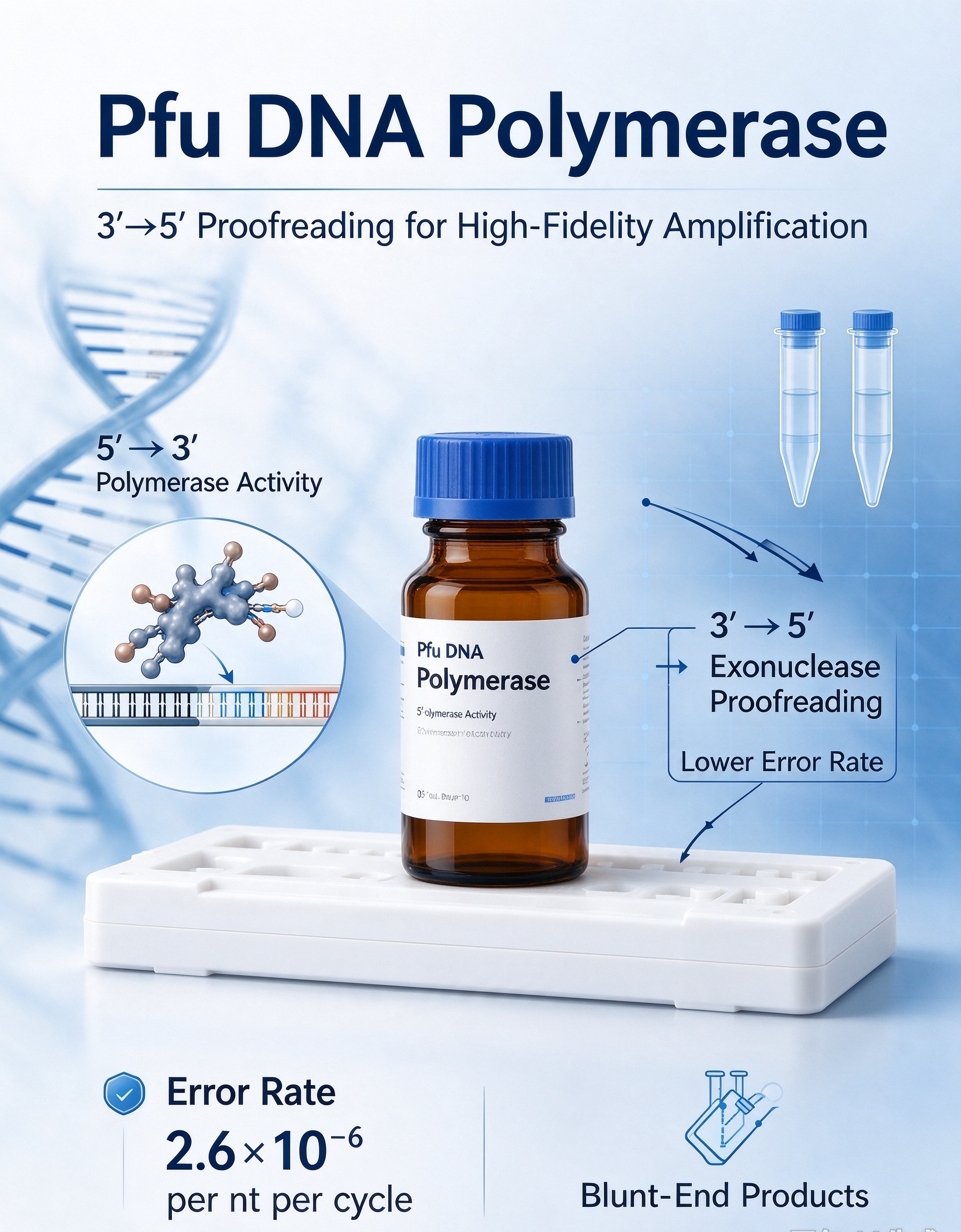
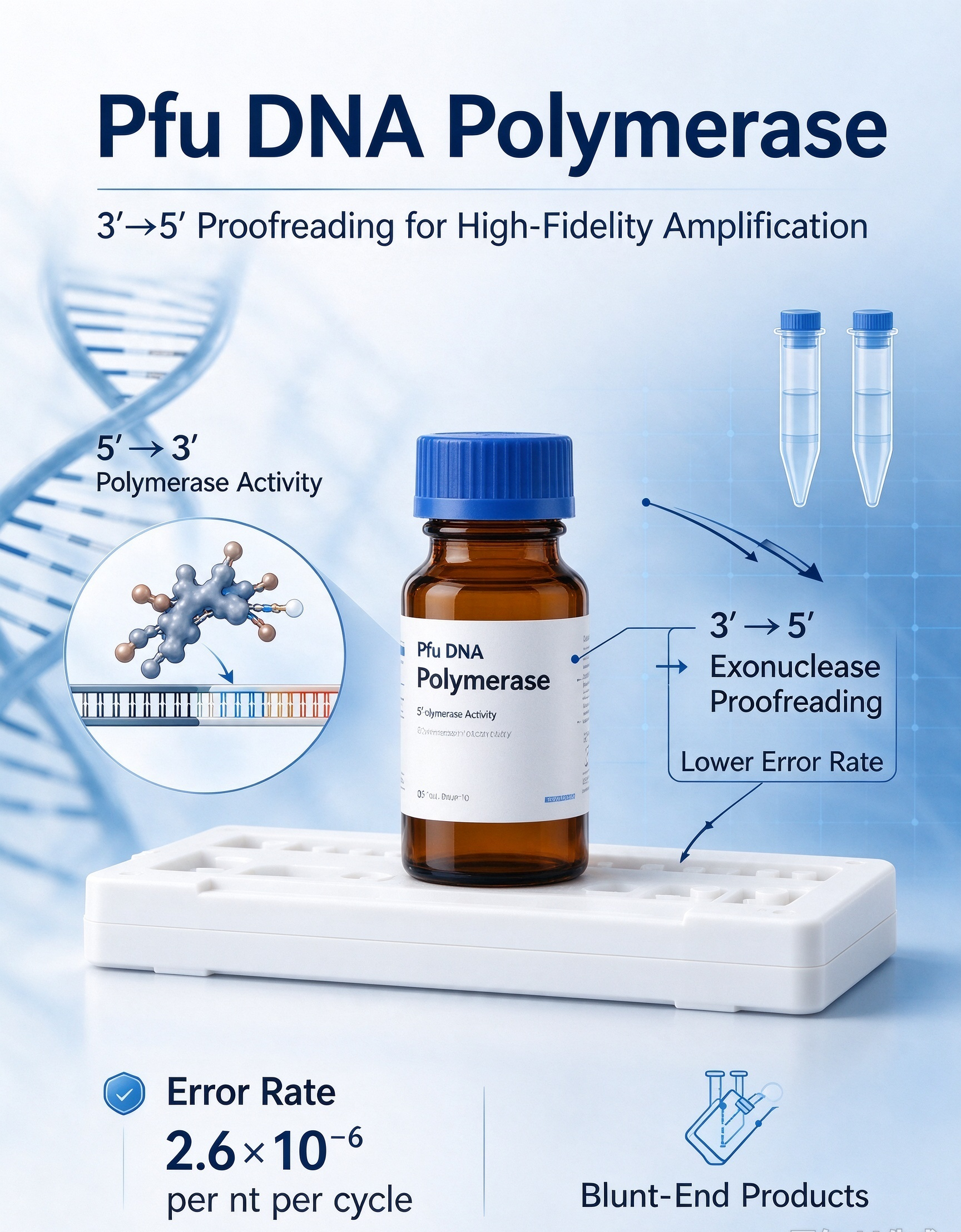
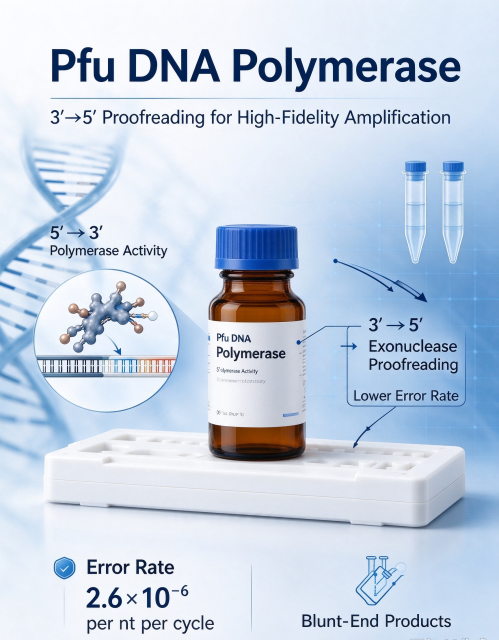
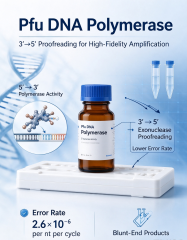
Pfu DNA Polymerase is a widely used high-fidelity DNA polymerase, a thermostable enzyme isolated from the hyperthermophilic archaeon Pyrococcus furiosus, with a molecular weight of 90 kDa. It catalyzes template-dependent DNA synthesis in the 5′→3′ direction. Unlike Taq polymerase, Pfu has 3′→5′ exonuclease proofreading activity, which drastically reduces amplification errors. Its error rate is 2.6 × 10⁻⁶ per nucleotide per cycle, far lower than Taq and also lower than many other high-fidelity polymerases such as Vent, DeepVent, Pwo and Tli. It is a cost-effective choice for high-fidelity PCR.
Pfu has 5′→3′ exonuclease activity and no reverse transcriptase activity.
Main Applications
High-fidelity PCR, site-directed mutagenesis, blunt-end PCR cloning, etc.
Note: Pfu-amplified fragments are blunt-ended, compatible with blunt-end cloning,
not suitable for standard T-vector cloning.
dUTP, dITP or primers containing dUTP/dITP cannot be used in Pfu-mediated PCR.
Unit Definition
One unit incorporates 10 nmol deoxyribonucleotides into DE-81-bound polynucleotide within 30 min at 72 ℃.
Assay buffer: 20 mM Tris-HCl (pH 8.8 at 25 ℃), 2 mM MgSO₄, 10 mM (NH₄)₂SO₄, 10 mM KCl, 0.1% Triton X-100, 0.1 mg/mL BSA, 0.75 mM activated calf thymus DNA, 0.2 mM each dNTP, 0.4 MBq/mL [³H]-dTTP.
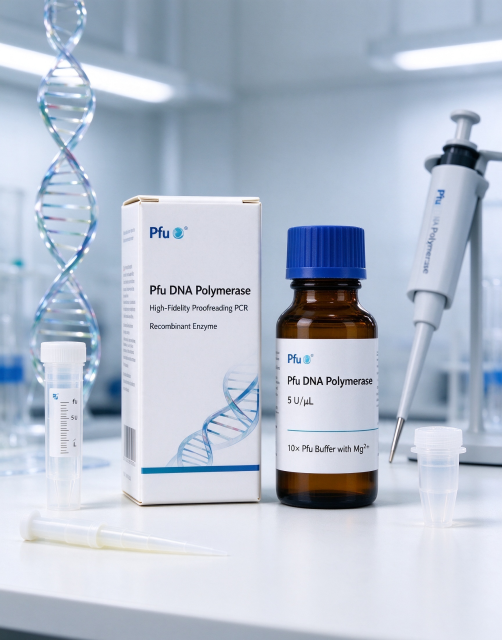
This product is recombinant Pfu DNA Polymerase expressed and purified in E. coli, with identical properties to native Pfu.
Kit Specifications
| Component |
200 U |
1000 U |
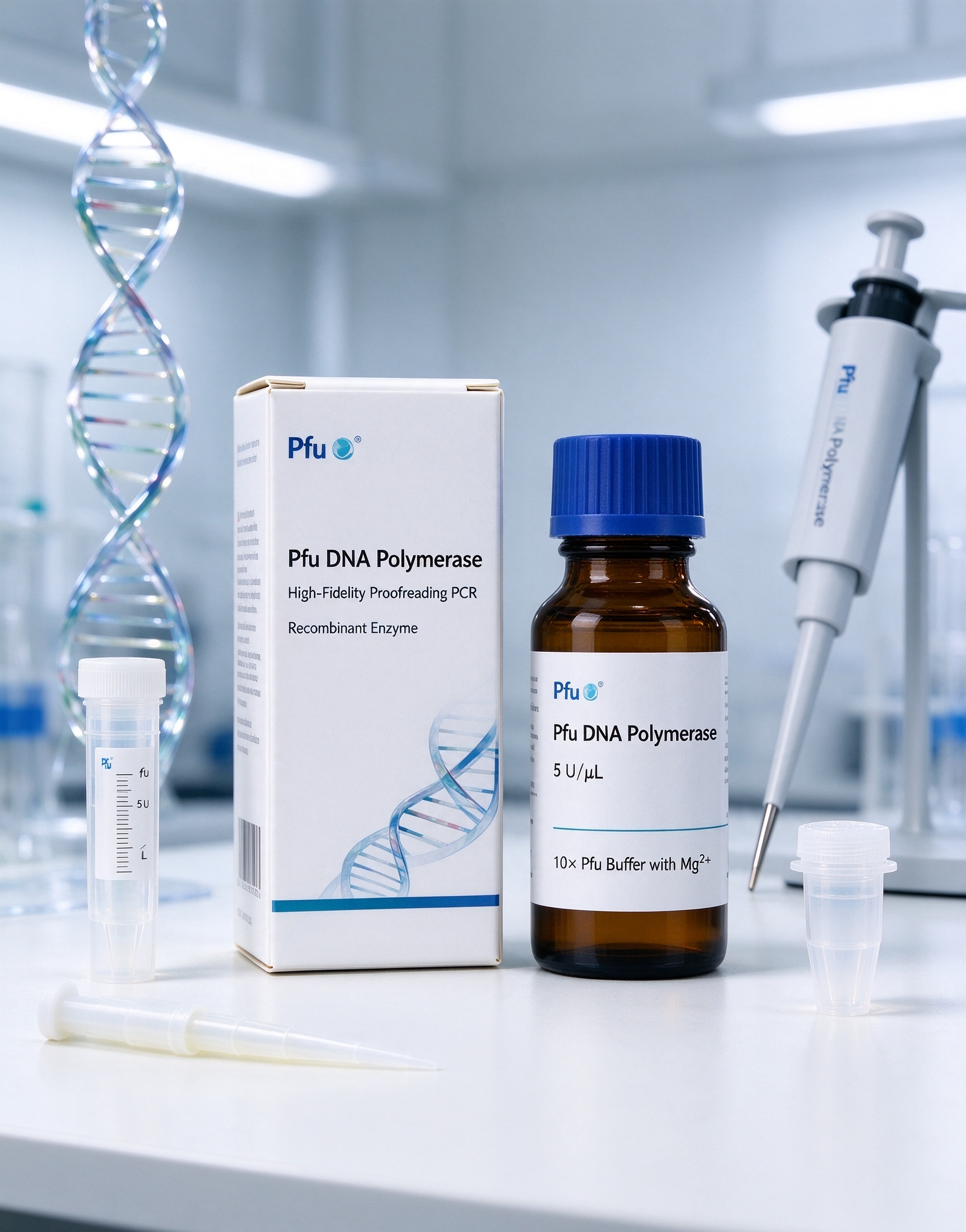
| Pfu DNA Polymerase (5 U/μL) |
40 μL |
200 μL |
| 10× Pfu Buffer (with Mg²⁺) |
1 mL |
5 × 1 mL |
Storage
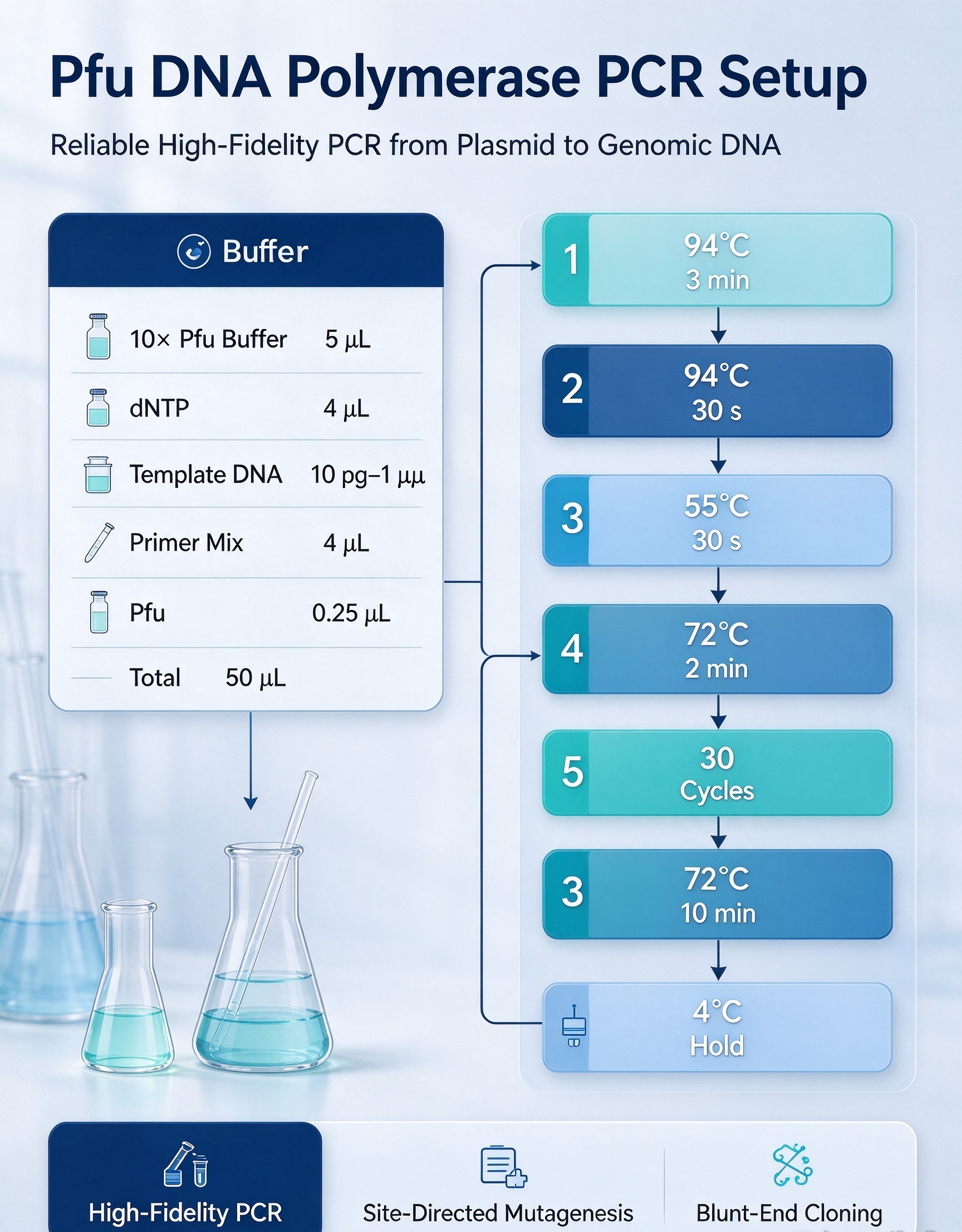
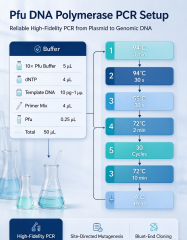
50 μL Reference PCR System
| Component |
Final Conc. |
Volume |
| ddH₂O / Milli-Q Water |
— |
(36.75−x) μL |
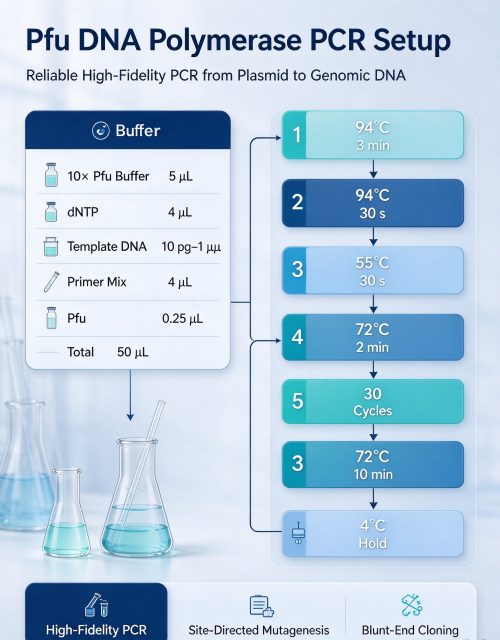
| 10× Pfu Buffer (with Mg²⁺) |
1× |
5 μL |
| dNTP (2.5 mM each) |
0.2 mM each |
4 μL |
| Template DNA |
— |
x μL (10 pg–1 μg) |
| Primer Mix (10 μM each) |
0.8 μM each |
4 μL |
| Pfu DNA Polymerase (5 U/μL) |
1.25 U / 50 μL |
0.25 μL |
| Total |
— |
50 μL |
Template recommendation (50 μL system):
- Mammalian genomic DNA: 0.1–1 μg
- E. coli genomic DNA: 10–100 ng
- Plasmid DNA: 0.1–10 ng
Excessive template easily causes non-specific bands.
Mix gently by pipetting or brief vortex, spin down for a few seconds.
Use mineral oil (Cat. YT399) if your PCR instrument does not have a heated lid.
Reference Thermal Cycling
- Initial denaturation: 94 ℃, 3 min
- Denaturation: 94 ℃, 30 s
- Annealing: 55 ℃, 30 s
- Extension: 72 ℃, 2 min
- Cycle steps 2–4: 30 cycles
- Final extension: 72 ℃, 10 min
- Hold: 4 ℃
Adjust annealing temperature, extension time and cycle number according to template, primer, fragment length and GC content.
Extension speed: ~2 min per kb of target fragment.
For initial amplification, up to 35 cycles can be used to improve yield.
The original text is cut off at “For those that require semi quantitative or quantitative analysis”, reserved for you to supplement later.