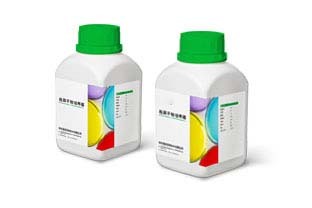
PDP Agar for Pyocyanin Determination of Pseudomonas aeruginosa
This dehydrated culture medium, also known as PDP medium, is specially formulated for the qualitative detection of pyocyanin secreted by Pseudomonas aeruginosa. It supports the growth of Pseudomonas aeruginosa and promotes the synthesis of characteristic pigments, enabling reliable biochemical identification.
Composition (g/L)
Peptone 20.0
Magnesium chloride 1.4
Potassium sulfate 10.0
Agar 18.0
pH: 7.4 ± 0.1 at 25 ℃
Verification Principle
Peptone and glycerol supply carbon and nitrogen sources for bacterial growth. Magnesium chloride and potassium sulfate effectively stimulate Pseudomonas aeruginosa to produce pyocyanin and fluorescein. Agar acts as the gelling agent of the medium.
Directions for Use
Weigh 49.4 g of this medium powder together with 10 g glycerol, dissolve in 1000 mL distilled water, dispense into containers, autoclave at 121 ℃ for 15 minutes, then store for later use.
Note: The medium contains magnesium chloride. Minor precipitation may occur after autoclaving, which is acceptable.
Pyocyanin Production Test — Method & Principle
Method: Pick suspicious colonies and streak onto PDP agar slants. Incubate for 24 hours and check for pigment formation. If pigment is visible, add 3.0–5.0 mL chloroform to the tube and shake vigorously to extract pyocyanin into the chloroform layer. Once the chloroform extract turns green, add approximately 1 mL of 1 mol/L hydrochloric acid and shake well before standing. A pink to red color in the upper acid layer indicates a positive result; no color change means negative.
Principle: Pseudomonas aeruginosa produces pyocyanin. Pyocyanin is soluble in chloroform and exhibits higher solubility in acidic aqueous solution. It undergoes reversible redox reactions: blue under alkaline conditions and red under acidic conditions. After adding HCl, pyocyanin transfers from the chloroform phase into the hydrochloric acid layer and turns red in an acidic environment.
Microbial Performance Test for PDP Medium
Prepare the medium following the instructions. Inoculate designated quality control strains and incubate aerobically at 36 ± 1 ℃ for 24 ± 2 hours.