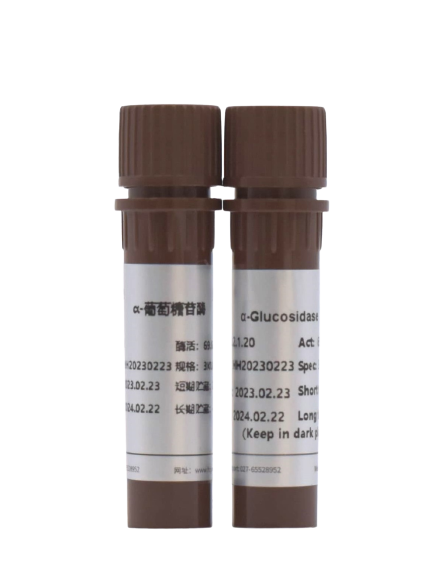
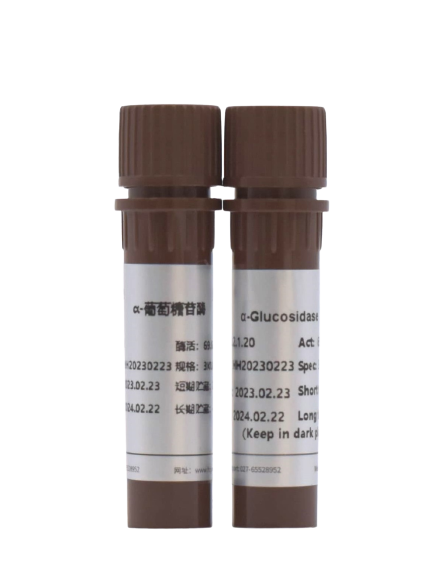
α‑Glucosidase for α‑Amylase Reagent Development and Large‑scale Preparation
α‑Glucosidase (EC 3.2.1.20) is a microbial glycoside hydrolase, supplied as white amorphous freeze‑dried powder. It is mainly used for research, development and bulk production of α‑amylase diagnostic reagents.
Technical Indicators
| Item |
Specification |
| Appearance |
White amorphous freeze‑dried powder |
| Protein Purity |
≥ 80% |
| Specific Activity |
≥ 10 U/mg enzyme powder |
| α‑Amylase |
≤ 0.00001% |
Enzymatic Properties
- Source: Microorganisms
- EC No.: EC 3.2.1.20
- Molecular Weight: 65 kDa (SDS‑PAGE)
- Isoelectric Point: 5.2
- Km value: 5.8 × 10⁻⁴ M (p‑Nitrophenyl‑α‑D‑glucopyranoside)
- Inhibitors: SDS, Ag⁺, Hg²⁺, Cu²⁺
- Optimal pH: 7.1
- Optimal Temperature: 50 ℃
- pH Stability: pH 6.0–8.0 (25 ℃, 16 h)
- Thermal Stability: Stable below 50 ℃ (pH 7.0, 10 min)
- Storage Stability: Retain over 90% activity after 12 months stored at -25 ~ -15 ℃
- Protector: BSA
Enzyme Activity Definition
One unit of enzyme activity is defined as the amount of enzyme that catalyzes the production of 1 μmol PNP per minute under specified reaction conditions.
Reagent Preparation
- Reagent I: 100 mM phosphate buffer, pH 7.0
- Reagent II: 20 mM p‑nitrophenyl‑α‑D‑glucopyranoside (dissolved in water, stable at 4 ℃ for 2 weeks)
- Reagent III: 200 mM Na₂CO₃ (21.2 mg/mL aqueous solution)
- Reagent IV: 200 mM potassium phosphate buffer, pH 7.0, containing 0.05% Tween 20 and 1 mM EDTA
- Test Sample: Dilute enzyme stock with Reagent IV to 0.006–0.022 U/mL
Operating Steps
- Add 1.0 mL Reagent I and 0.5 mL Reagent II into a 5 mL centrifuge tube, preheat at 37 ℃ for 5 minutes.
- Add 0.5 mL test sample, mix well and incubate at 37 ℃ for 15 minutes. Add 2.0 mL Reagent III to stop the reaction.
- Measure sample absorbance at 400 nm.
- Blank control: Reverse the adding order of Reagent III and test sample, then measure blank absorbance.